
Pollo AI
Pollo AI bundles dozens of third-party generative models behind a single workspace: video generation with Pollo 2.5 and Seedance 2.5, image generation with Pollo Image 2.0 and Nano Banana, plus avatar, audio and editing tools. Credits are shared across models, paid plans remove watermarks, and an MCP/API path exists for automation.
What is Pollo AI?
Pollo AI is a multi-model creative platform that gives one subscription and one interface access to a large catalogue of generative video, image, avatar and audio models. Instead of committing to a single vendor's model — one video generator, one image generator, one avatar tool — users pick the model that suits a shot inside Pollo's workspace, spend a shared credit balance, and export watermark-free results on paid plans.
The library covers the mainstream generative categories. On the video side that includes Pollo's own models and third-party systems such as Seedance, with published credit costs per generation (for example 5 credits per 5-second clip on Pollo 2.5 at 720p, 30 credits per 5-second clip on Seedance 2.5 at 480p) and support for text-to-video, image-to-video and reference-driven generation. The image side spans Pollo Image 2.0, Pollo Image 1.6 and Nano Banana variants with their own per-image credit costs, covering text-to-image, image-to-image and editing workflows. Avatar and talking-video tools sit alongside audio and music features, so a campaign that needs a presenter clip, a product still and a voiceover can be produced inside one account rather than three.
The commercial logic is credits. Every plan, including the free tier, comes with a monthly credit allowance: Free includes 20 credits, Lite 400, Pro 800 and Ultra 5,000, and credits are consumed at different rates depending on which model and resolution you choose. That design lets users spend on premium models for hero shots and cheaper models for drafts, and it is the reason model choice in Pollo is a budgeting decision rather than an aesthetic one alone. Paid tiers additionally unlock watermark-free output, faster generation and more parallel tasks: up to 80 videos a month on Lite, 160 on Pro and 1,000 on Ultra, with parallel task counts rising from two to six.
Pollo also positions itself as a publishing and workflow layer rather than only a generator. Plans advertise access to all models, add-on credit packs that do not expire, and Pollo MCP access for automating generation from an AI assistant or pipeline, which is the bridge for teams that want to run the same models programmatically rather than by hand. The product is aimed at creators, marketers and small teams who would otherwise juggle several subscriptions, and it trades some of the depth of a single-model specialist tool for breadth, model choice and a single billing relationship.
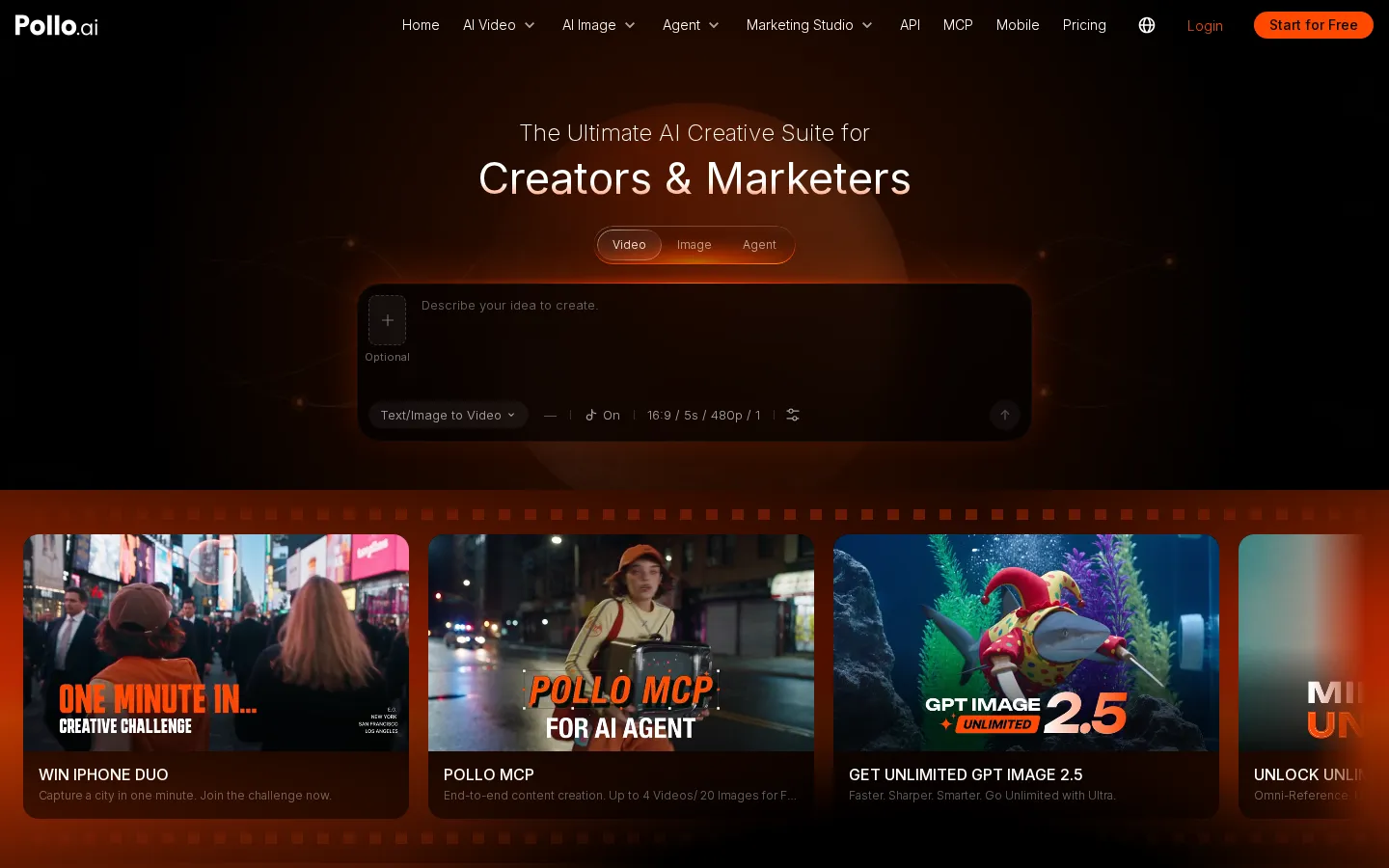
Pollo AI Core Features
Multi-model access
dozens of video, image, avatar and audio models available from one workspace and one credit balance.
Video generation
text-to-video, image-to-video and reference-driven generation with Pollo 2.5, Seedance 2.5 and other models at published credit costs.
Image generation and editing
Pollo Image 2.0, Pollo Image 1.6 and Nano Banana variants for text-to-image, image-to-image and edits.
Avatar and talking-video tools
presenter and character clips generated from images and scripts for marketing and social content.
Audio and music generation
voiceover and music creation inside the same account as the visual tools.
Credit-based pricing with add-on packs
a shared balance across models, plus top-up packs that do not expire on paid tiers.
Watermark-free output on paid plans
Free renders carry restrictions, while Lite, Pro and Ultra remove the watermark.
Pollo MCP and automation access
paid plans advertise MCP access so generation can be driven from an assistant or pipeline rather than the UI.
Who is Pollo AI for?
Pollo AI targets creators and small teams who need several generative model families without managing several subscriptions. Social media managers use it to produce short vertical videos, image posts and avatar clips for the same campaign, switching models when one handles a subject better than another. Content creators and YouTubers use the video models for b-roll, thumbnails and short-form edits, and the credit system lets them draft on cheaper models before spending on a premium render. Performance marketers and ad agencies use the image and video stack for product visuals, ad variants and quick concept tests, and value that a single workspace produces all of them without a per-model contract. E-commerce sellers use image generation and editing for product staging and catalogue visuals, while brand designers use image-to-image paths to explore directions before committing to a shoot. Small businesses without a dedicated creative team use the free tier and Lite plan to test whether AI generation fits their workflow before committing budget, and independent freelancers use Pro or Ultra when client work needs more parallel renders and watermark-free delivery. Product managers and developers who want to wire generation into a pipeline use Pollo's MCP/API path so the same models can be called programmatically. Teams that need deep, model-specific control — fine-tuning, training on private assets, unusual resolutions, or research-grade provenance — are not the audience; that work belongs with the model vendors directly. Users whose needs are limited to one narrow task, such as only background removal, will usually do better with a single-purpose free tool.
Pollo AI Use Cases
Produce a week of short vertical videos for social channels from prompts and product stills.
Generate thumbnail and hero images for a blog post or campaign landing page.
Turn a single product photo into several staged marketing visuals with different backgrounds.
Create an avatar presenter clip for onboarding or ad videos without filming anyone.
Draft a shot on a cheap model, then re-render the approved version on a premium model.
Generate a voiceover or music bed for a video and assemble the pieces in one workspace.
Test several video models against the same prompt to find which handles a subject best.
Automate recurring generation through the MCP integration instead of prompting by hand.
Pollo AI Pros and Cons
Pros
- One subscription covers video, image, avatar and audio model families, avoiding multiple per-model contracts.
- Published per-model credit costs make spend predictable and let teams draft cheaply and finish on premium models.
- Paid plans deliver watermark-free output, faster generation and up to six parallel tasks for batch work.
- Free tier includes 20 credits, so the platform can be evaluated before paying.
- MCP access gives a documented path from manual prompting to automated generation.
Cons
- Credits are consumed quickly by premium models and high resolutions, so heavy users may need add-on packs on top of the subscription.
- The price of convenience is less control than calling a model vendor's own API directly, including fewer advanced parameters.
- Free tier output carries restrictions, and there is no published unlimited-use tier for high-volume teams.
FAQ About Pollo AI
Pollo AI Pricing
Credit-based freemium: Free includes 20 credits, Lite $15/month billed annually (about $12/month effective) with 400 credits, Pro $29/month billed annually with 800 credits, and Ultra $129/month billed annually with 5,000 credits; add-on credit packs do not expire.
Check official pricingFree
20 credits to test the workspace and model selection; output carries free-tier restrictions including a watermark.
Lite
Billed annually (about $12/month at the annual rate); 400 credits per month, up to 80 videos and 400 images, 2 parallel tasks, all models, Pollo MCP, watermark-free outputs, standard support.
Pro
Billed annually (about $14.50/month at the annual rate); 800 credits per month, up to 160 videos and 800 images, 3 parallel tasks, watermark-free outputs, priority support.
Ultra
Billed annually (about $99/month at the annual rate); 5,000 credits per month, up to 1,000 videos and 5,000 images, 6 parallel tasks for high-volume production.
Pollo AI Alternatives

Filmpire
Filmpire combines AI video, image, and voice generation in one browser studio built on a shared credit balance. Start from a prompt or reference image, choose from models such as Hailuo, Seedance, Kling, Veo, or GPT Image, let the AI director plan a full story, then export watermark-free files with commercial rights on any paid plan.

APIPod
APIPod is a unified AI media generation API for developers: one key unlocks 156 image, video and language models from 14 providers, including Seedance, Google Veo, Sora, Nano Banana, GPT Image, Kling, Wan and MiniMax. Billing is pay-as-you-go through credit top-ups, metered per token, request or second, with weighted multi-channel routing, automatic failover and circuit breakers on every request.
Sartoris
Sartoris is a browser-based AI creative studio that generates premium still images and cinematic video from text prompts, with optional start and end frames plus image, video, and audio references. It runs on purchased credits rather than a subscription, keeps one library for both media types, and deletes finished generations twelve hours after they are created.